

Solving Heavy Industry's Thick-Section Welding Bottlenecks: KeyGree's Integrated Submerged Arc Welding Solutions
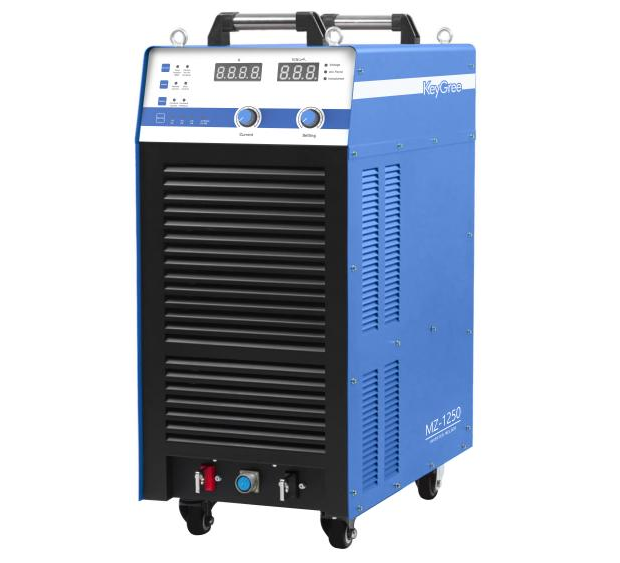
KeyGree’s approach is fundamentally different: integrated SAW solutions where power source, motion control, and process subsystems are engineered to work in concert — transforming welding from a production bottleneck into a strategic asset.
The Core Bottlenecks: Where Legacy SAW Systems Fall Short
Traditional SAW operations often struggle with four interconnected challenges that erode profitability and hinder scalability.
1. The Inflexibility & Setup Gridlock
SAW's principle—an arc burning beneath a layer of granular flux—delivers exceptional quality but is inherently positional, best suited for flat or horizontal grooves. Welding large-diameter pipe girth seams or the longitudinal seams of a massive pressure vessel requires complex coordination between the welding head and the workpiece movement. Disparate systems—a power source from one vendor, a tractor from another, and a generic turning roll—create a integration nightmare. Engineers spend hours, sometimes days, calibrating communication protocols and synchronizing motions. This "setup gridlock" drastically reduces arc-on time, making high-mix, short-run projects economically unviable and throttling output in high-volume scenarios.
2. The Precision Deficit in Critical Joints
As wall thicknesses increase, joints transition from simple V-grooves to complex narrow-gap preparations to reduce weld volume and distortion. Manually tracking a narrow, deep groove over multiple passes is virtually impossible with consistency. Even with basic automation, thermal distortion can cause the joint to wander, leading to sidewall lack-of-fusion, a severe defect that necessitates costly and time-consuming radiographic testing and repair. The industry's answer often involves slowing down the process and employing highly skilled technicians for constant supervision, which reintroduces variability and becomes a severe bottleneck for scaling production.
3. The Hidden Costs of Process Inefficiency
The SAW process consumes two primary materials: wire and flux. Inefficient systems suffer from significant flux waste, as un-melted granules are not recovered, directly impacting the cost per meter of weld. Furthermore, managing hot slag and spent flux creates workshop housekeeping issues and potential contamination. Beyond materials, energy inefficiency in older, transformer-based power sources leads to high operational costs. The inability to precisely control heat input can also lead to excessive penetration or underwelding, resulting in rework that doubles energy and material consumption for a single joint.
4. The Data Black Box
In an era of digital manufacturing and strict quality certification (e.g., ASME, EN, API), traceability is paramount. Traditional SAW systems operate as a "black box," with little to no recording of actual welding parameters against the prescribed Welding Procedure Specification (WPS). This lack of data makes root-cause analysis of defects difficult and complicates compliance reporting, exposing manufacturers to risk.
The Integrated Solution: KeyGree's Systematic Approach
KeyGree tackles these challenges not with isolated products, but with a philosophy of Integrated Welding Systems. We engineer coherent solutions where the power source, movement, and control logic are designed to work in concert.
1. Power Source Innovation: The Intelligent Heart
At the core is our advanced SAW power source, incorporating state-of-the-art inverter technology and digital control. Beyond providing stable DC or AC output, our systems feature sophisticated waveform control. Research confirms that tailored current waveforms, such as pulsed or AC square waves, can refine weld pool grain structure, minimize porosity, and combat arc blow—directly addressing quality concerns in critical applications. By utilizing advanced semiconductor technology, our power supplies achieve higher efficiency, reducing energy costs and offering a greener footprint.
KeyGree Capability Highlight: Our R&D team specializes in customizing output characteristics and control algorithms to match specific material and flux combinations, ensuring optimal arc behavior for everything from carbon steel to duplex stainless steels.
2. The Motion Ecosystem: Precision in Three Dimensions
A powerful arc is futile without precise placement. KeyGree's solutions encompass the full spectrum of mechanization:
Welding Tractors & Cross-Seam Carriages: For long, straight seams on plates or beams, our programmable tractors deliver consistent travel speed and oscillation, ensuring perfect bead placement.
Column-and-Boom & Turntable Systems: For circumferential welds on pipes or vessels, we provide integrated systems where the boom-mounted welding head and the workpiece rotation are synchronously controlled by a single interface. This eliminates the lag and slip inherent in mismatched equipment.
KeyGree Capability Highlight: We design and manufacture these positioning systems in-house, allowing for seamless integration and custom reach, load capacity, and precision specifications to fit the exact geometry of your workpieces.
3. The Enabling Sub-Systems: Efficiency Multipliers
Flux Recovery Systems: KeyGree integrates efficient vacuum recovery units that clean, sieve, and return unused flux directly to the hopper. This closed-loop system typically cuts flux consumption by 20-30%, pays for itself rapidly, and maintains a cleaner, safer workshop.
Oscillation & Wire Correction: For narrow-gap and multi-pass welding, our precision oscillation heads with automatic voltage control (AVC) maintain the arc precisely on the sidewalls. Wire correction units ensure the electrode wire is straight and aligned, crucial for robotic consistency.
Advanced Application Focus: Pushing the Boundaries of SAW
For the most demanding applications, KeyGree's advanced configurations deliver transformative results.
1. Narrow-Gap SAW for Massive Structures
When welding sections over 100mm thick, narrow-gap joint design is essential to save time and filler metal. KeyGree's narrow-gap solutions combine a specially designed welding head, capable of navigating grooves as narrow as 15-20mm, with a sidewall tracking system (laser or tactile). This ensures flawless fusion in every pass, reducing total weld volume by up to 50% compared to conventional wide-angle grooves and making projects like nuclear reactor components and heavy forging welds commercially viable.
2. Tandem & AC/DC Multi-Wire SAW for Unmatched Productivity
For applications where deposition rate is king, such as cladding or long seam welds on thick plate, KeyGree offers advanced multi-wire systems.
Tandem SAW: Two wires, two power sources, one weld pool — effectively doubling travel speed without compromising penetration.
AC/DC Dual-Wire SAW: A leading DC electrode for deep penetration, a trailing AC electrode for filling and bead shaping. The AC arc stabilizes the pool and reduces magnetic arc blow — a common issue in thick-section ferritic steels.
The result: deposition rate increases of 70–100%, exceptional bead appearance, and precise control over penetration profile.
KeyGree Capability Highlight: Tuning multi-wire systems requires expertise in waveform phasing and wire configuration. Our application engineers optimize the setup for your specific material and joint geometry.
KeyGree Capability Highlight: Configuring and tuning multi-wire systems is a complex art. Our application engineers possess the expertise to determine the optimal wire configuration, electrical setup (phasing of AC waveforms), and parameters to maximize both speed and quality for your specific case.
The KeyGree Difference: From Equipment Supplier to Solutions Partner
Our commitment extends beyond manufacturing hardware. It encompasses a partnership model focused on delivering guaranteed outcomes.
Custom-Engineered Systems: We recognize that no two fabrication shops are identical. KeyGree thrives on developing tailored solutions—whether it's a specialized welding head for a unique joint, a fully automated cell with robotic workpiece handling, or a control system that integrates with your factory-wide MES.
Application Engineering Support: Our team works alongside your engineers from the feasibility study through commissioning and technician training. We help optimize welding procedures, select the correct consumables (wire-flux combination), and validate the process to meet required standards.
Future-Proof Technology: Our systems are built with connectivity in mind, providing the data logging and interface capabilities needed for Industry 4.0 smart factory integration, ensuring your investment remains relevant.
Welding Thicker, Faster, and Smarter
In heavy fabrication, thick-section welding is the critical path — and fragmented SAW systems make it a bottleneck. KeyGree’s integrated approach dismantles this constraint by unifying intelligent power, precision motion, and process-supporting subsystems into a single, controllable package.
The result is more than advanced equipment. It is a strategic capability: weld thicker sections, achieve faster throughput, and operate with data-driven confidence — turning the welding department from a cost center into a competitive advantage.
Keygree Group Co., Ltd.
Keygree Group Co., Ltd.
+86 18058395375
info@keygree.com
Legal Disclaimer:
EIN Presswire provides this news content "as is" without warranty of any kind. We do not accept any responsibility or liability for the accuracy, content, images, videos, licenses, completeness, legality, or reliability of the information contained in this article. If you have any complaints or copyright issues related to this article, kindly contact the author above.
